
In 2026, the global raised access floor industry is undergoing a dual transformation driven by policy shifts and technological upgrades, with green building materials emerging as the core development theme. Propelled by digital transformation and the green building wave, raised access floors have become critical infrastructure for data centers, premium office spaces, clean rooms, and similar environments. Their anti-static properties, cable concealment, and flexible adaptability directly impact operational efficiency and safety. This article analyzes the core value of raised access floors, regional market differences, key selection criteria for quality manufacturers, and profiles the world's leading brands in 2026, providing a professional reference for global buyers.
1. What is a Raised Access Floor?
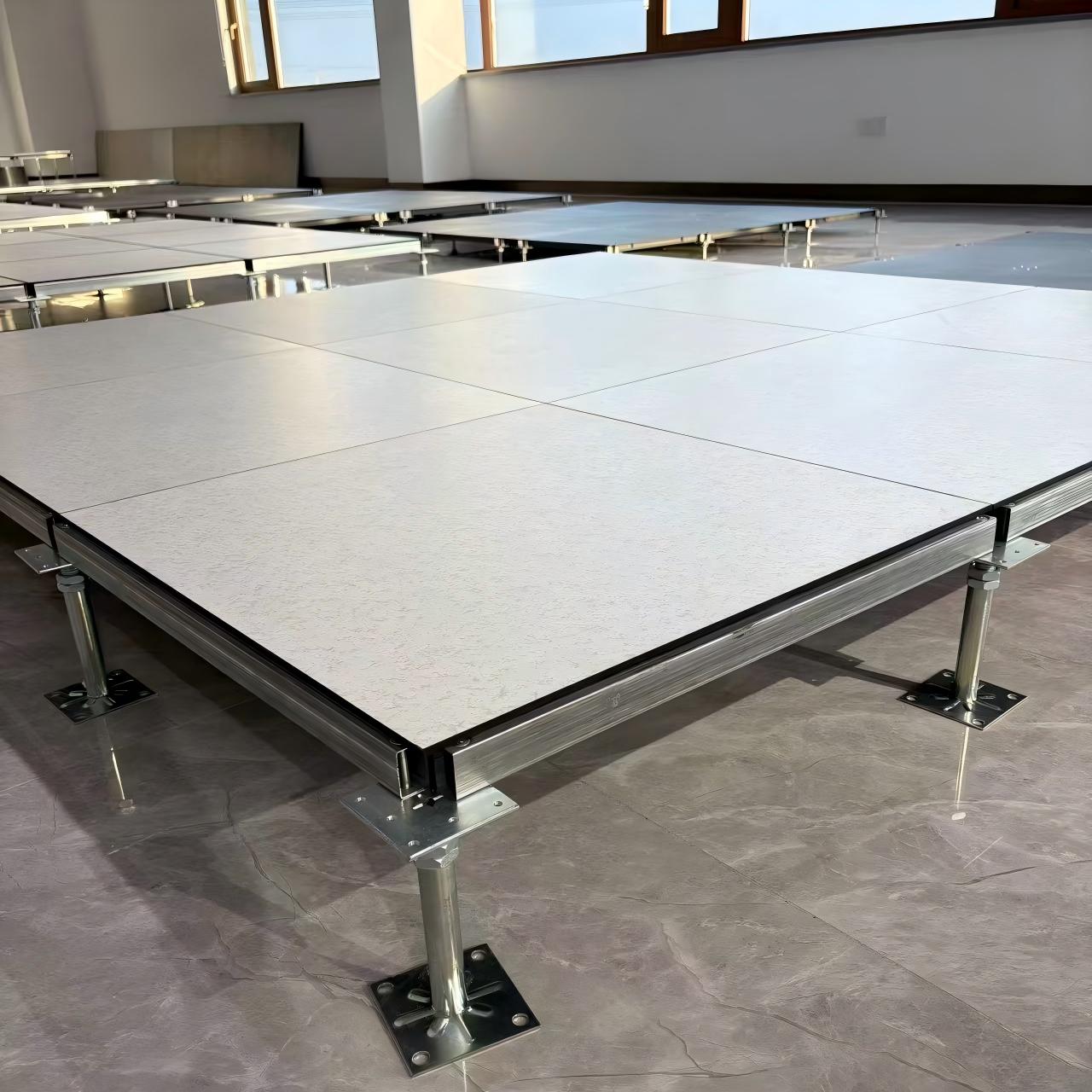 A raised access floor is a modular flooring system consisting of adjustable-height pedestals, stringers, and panels. Its core advantage lies in creating a usable space between the finished floor and the base slab, offering multiple functional benefits. Essentially, it forms an "interstitial service layer" that neatly conceals electrical, data, and HVAC conduits, maintaining a clean aesthetic. Specialized panels can also meet specific needs like static control, precise airflow, and heavy-load bearing. Their easy installation and reconfiguration support future space modifications and maintenance. Aligning with green, low-carbon, and circular economy principles, these floors come in various materials like steel, calcium sulfate, aluminum, and composite wood, suiting diverse design schemes. They are widely used in data centers, modern offices, clean rooms, and precision manufacturing facilities.
2. Regional Focus: Market Characteristics and Procurement Tips
European Market: Emphasizes environmental standards, design aesthetics, and high-precision manufacturing. Prioritize products with strong sustainability credentials, recycled material content, and favorable lifecycle cost analysis.
North American Market: Dominated by data center and high-end industrial projects, with UL fire ratings and CISCA standards as key compliance benchmarks. Focus on fire resistance, seismic performance, and compatibility with data center infrastructure.
Asian Market: Driven by rapid growth in high-end commercial complexes and data centers, especially in China, Southeast Asia, and India. Key factors are cost-effectiveness, swift delivery, and localized technical support.
Oceania Market: Governed by strict building codes. Prioritize products with excellent weather resistance, corrosion protection, and proven seismic performance.
3. How to Choose a Reliable Raised Floor Manufacturer
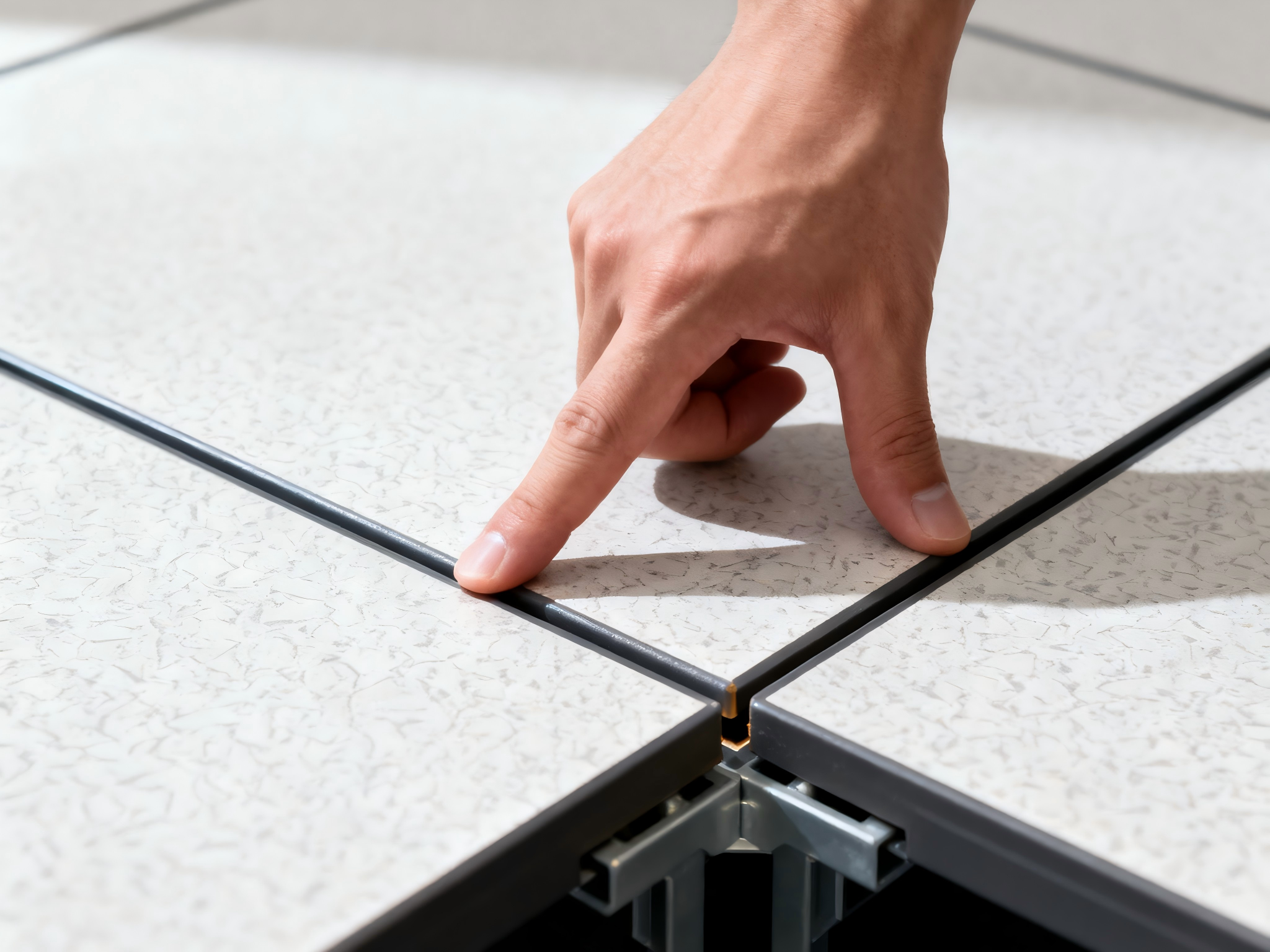
Selecting a manufacturer requires balancing compliance, technical capability, and service quality. Evaluate based on these five critical points:
Certifications & Compliance: Prioritize manufacturers with ISO 9001 (Quality Management) and ISO 14001 (Environmental Management) certifications. Ensure products carry region-specific marks (e.g., CE for Europe, UL for North America, KS for Asia). Request third-party test reports to verify core performance metrics like static dissipation, load capacity, and fire resistance.
R&D and Technical Prowess: Assess if the company has dedicated R&D teams and independent testing labs. The number of patents, especially related to high load-bearing and ventilation, is a strong indicator. Manufacturers with dynamic environmental simulation testing capabilities are better equipped for complex projects like data centers.
Production Scale & Customization: An annual production capacity of ≥2 million square meters ensures reliable delivery for large projects. Automated production lines are crucial for fulfilling custom requests (special sizes, materials). Export-oriented manufacturers typically have deeper knowledge of international standards, reducing compliance risks.
End-to-End Service Support: Top manufacturers offer comprehensive services, including site survey, design consultation, load calculations, installation supervision support, and 24/7 after-sales service. This holistic approach prevents common installation and maintenance issues.
Proven Project Experience: Examine the manufacturer's portfolio for relevant benchmark projects (e.g., data centers, corporate HQs). Long-term partnerships with internationally recognized companies are a positive sign. Project completion and acceptance reports can further validate product reliability.
4. Top 10 Global Raised Access Floor Manufacturers (Europe/Asia/North America/Oceania)
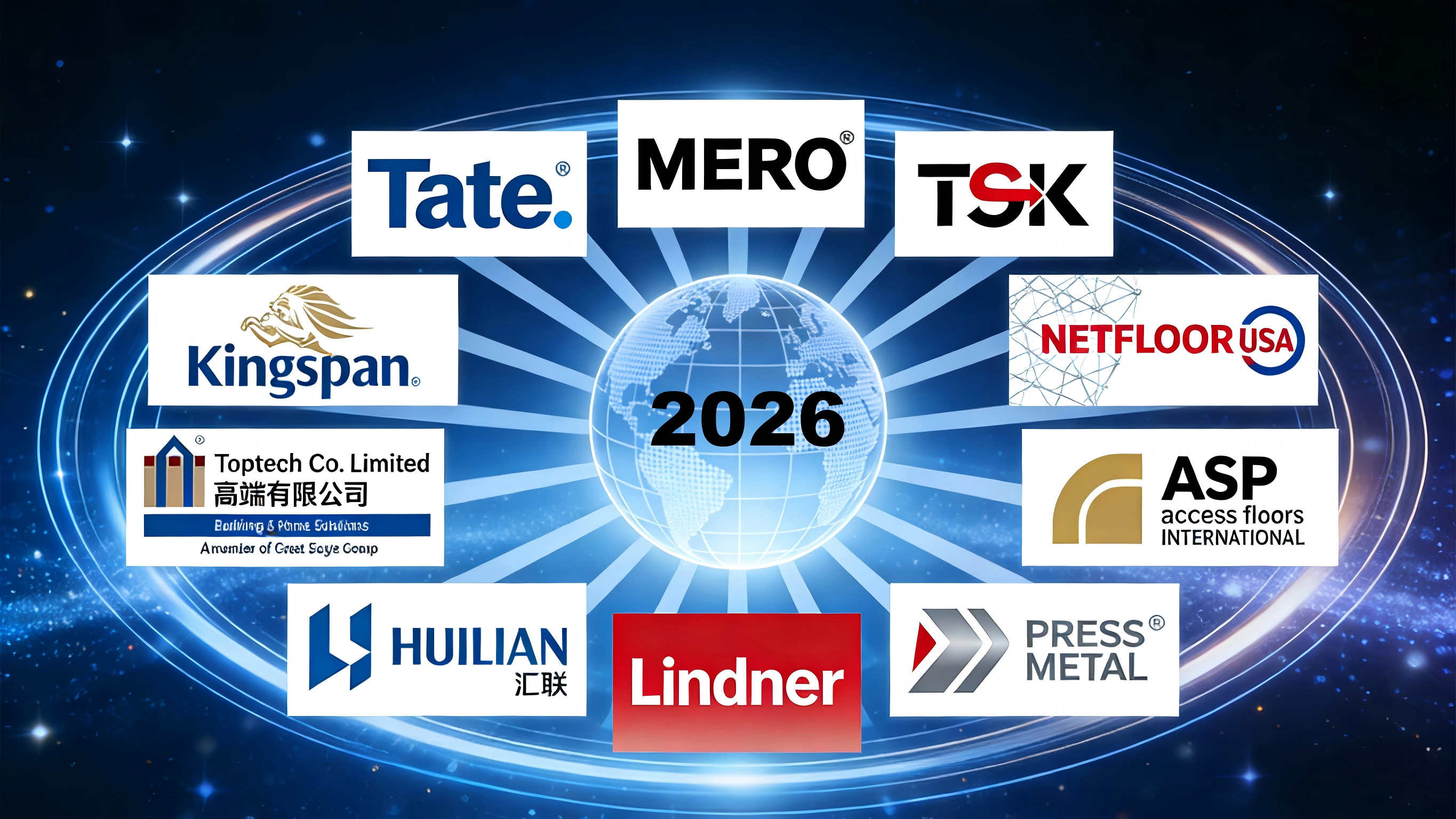
(1) North American Brands

Founded in 1962, Tate specializes in data center cooling and raised floor solutions. With a weekly output of 140,000 panels, 40% of its orders are customized. Its products are UL and CISCA certified, serving multinational projects like premium offices in Dubai and major North American data centers.

A leader in industrial-grade raised floors in North America, ASM focuses on data centers and control rooms. Its products achieve an oxygen index ≥35% for fire resistance, compliant with UL and U.S. energy codes. They undergo 1 million-cycle fatigue load testing, with a supply chain covering North and South America.

Specializing in modular, lightweight floor systems for offices and smart buildings, Netfloor USA products are UL certified with an oxygen index ≥35%. Their quick-install design allows a team of three to install approximately 60 m² daily, significantly shortening project timelines. Key advantages are wiring flexibility and cost efficiency, with total installed and maintenance costs up to 40% lower than traditional systems, meeting the rapid renovation needs of the North American commercial real estate market.
(2) European Brands

A global benchmark since 1928, MERO-TSK focuses on anti-static floors. Operating from a 37,000 m² facility with 6 production lines, its products comply with the EN12825 European standard and are widely used in automotive R&D centers and high-end offices.
A global giant in high-performance building materials established in 1965, Kingspan operates in over 70 countries. Its raised floor line emphasizes thermal insulation and green attributes, holding CE and REACH certifications, making it suitable for sustainable building projects.

A diversified construction materials group, Lindner's raised floor division excels in multi-scene adaptability. Products are CE certified and some hold Cradle to Cradle certification. Offering steel, aluminum, and wood-core options, they suit offices, broadcasting studios, hospital operating rooms, and more, providing integrated design-and-install solutions.
(3) Asian Brands

Recognized as a specialized and innovative enterprise, Huilian integrates design, manufacturing, and export, with an annual capacity exceeding 4 million m². Products are certified to CE, UL, KS, and other international standards. With over 70 core patents focused on high load-bearing and intelligent ventilation, its independent lab conducts central load and dynamic environmental simulation tests. Serving global data center and advanced manufacturing sectors, Huilian exports to key markets worldwide, offering rapid 15-day delivery and multilingual, full-process support for international trade.

A well-known name in electronics manufacturing services, Press Metal's floors comply with CISCA and MOB standards and are UL and CE certified. They cater to precision wafer fab environments, meeting the high-standard anti-static and heavy-load requirements of companies like Samsung and TSMC, with a market reach across Asia-Pacific and North America.
Toptech (Hong Kong, China)
A benchmark in global precision manufacturing, Toptech leverages material science expertise to produce lightweight aluminum raised floors known for superior corrosion resistance and seismic performance. Compliant with Japanese JIS standards and international EMC requirements, they are widely used in high-end electronics factories and smart buildings.
(4) Oceania Brand
ASP Access Floors (Australia)
A leader in Oceania's raised floor market, ASP serves Australia, New Zealand, and Southeast Asia. Its products meet the Australian NCC building code. A key strength is the lightweight AAC (Autoclaved Aerated Concrete) panel system, enabling fast installation (approx. 50 m² daily by a 3-person team) and high fire resistance (FRL 120/120/120), suitable for both residential and commercial projects.
5. Huilian – Your Trusted Raised Access Floor Manufacturer
Jiangsu Huilian, a leading force in China's raised access floor industry, has built its reputation on years of deep specialization. With "Technological Innovation, Global Compliance, and End-to-End Service" as its core competencies, Huilian has become the preferred partner for numerous multinational corporations.

Core Strengths
Full International Compliance: Certified to ISO 9001 and ISO 14001, Huilian's products meet CE, UL, KS, CISCA, and other key international standards. They are recognized by China's National Center for Quality Supervision and Testing of Anti-static Products. Its global export network covers major markets, and it maintains long-term partnerships with international brands like ASM and Tate.
Leading R&D Capability: Huilian holds over 70 patents (including 10 invention patents). It operates the industry's first self-built anti-static testing laboratory, capable of conducting all key tests in-house, including central load, rolling impact, and static dissipation. The company actively participates in setting industry standards for calcium sulfate floors, translating its research into widely adopted specifications.
Scalable Custom Production: With two production bases spanning 140,000 m², Huilian is one of the few manufacturers capable of large-scale production of all three major floor types: steel, calcium sulfate, and aluminum. Its annual capacity of over 4 million m², supported by automated lines for custom sizes and materials, ensures reliable delivery for large international projects, with lead times as short as 10 days.
Validated by Benchmark Projects: Huilian's portfolio includes successful large-scale projects across diverse sectors: data centers, commercial offices, cleanrooms, microelectronics/semiconductor fabs, and luxury hotels.
Comprehensive International Trade Service: Huilian provides end-to-end support for global buyers, including custom design consultation, international logistics coordination, remote installation guidance, and 24/7 after-sales support, effectively addressing the entire procurement cycle's pain points.
6. Conclusion
The global raised access floor market in 2026 is rapidly evolving towards greater sustainability and customization. Diverging regional compliance requirements and application needs pose significant challenges, making the manufacturer's overall capability more critical than ever. Choosing a manufacturer with proven international compliance, core technological patents, and full-cycle service support is the key to ensuring project quality and long-term operational success.
 English
 العربية
 Français
 Русский
 Español
 Português
 Deutsch
 italiano
 日本語
日本語 한국어
한국어 Nederlands
 Tiếng Việt
 ไทย
ไทย Polski
 Türkçe
 Bahasa Melayu
 Filipino
 Bahasa Indonesia
 magyar
 Română
 Čeština
 қазақ
қазақ Српски
 हिन्दी
 فارسی
فارسی Slovenčina
 Slovenščina
 Norsk
Norsk Svenska
 українська
 Ελληνικά
 Suomi
Suomi Հայերեն
 עברית
עברית Dansk
Dansk Shqip
Shqip বাংলা
বাংলা Hrvatski
 Afrikaans
 Gaeilge
 Eesti keel
 नेपाली
 Oʻzbekcha
 latviešu
 Azərbaycan dili
 Euskara
 Български
 Català
 ქართული
 Hausa
Hausa Lietuvių


